
In-Game Advertising: How It Works and Programmatic Marketing Applications
Discover how in-game advertising works, integration methods, and how to apply it to your programmatic marketing strategy.
Contents
- What Is In-Game Advertising?
- In-Game Advertising: Definition and Main Types
- Most Common Advertising Formats in In-Game Advertising
- What Is Advergaming and How Does It Differ from In-Game Advertising?
- How In-Game Advertising Works in Programmatic
- Benefits of In-Game Advertising for Brands and Advertisers
- What Do Developers and Players Think About In-Game Advertising?
- Best Practices for Effective In-Game Advertising Campaigns
- In-Game Advertising and Artificial Intelligence
- Why Use a DSP for In-Game Advertising
- Future Trends in In-Game Advertising
- Frequently Asked Questions About In-Game Advertising
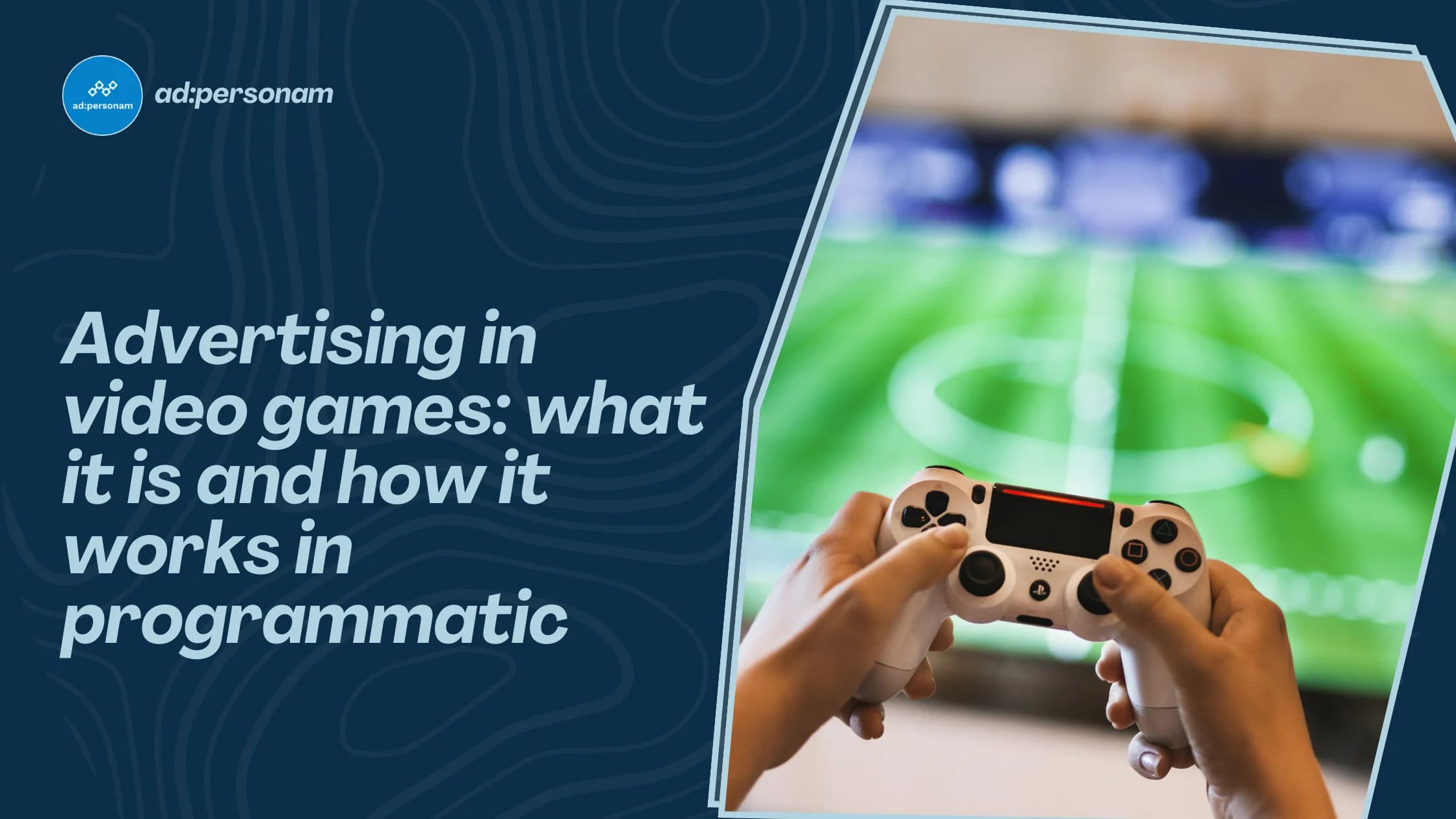
In-game advertising is the practice of placing ads within video games in an integrated and often non-intrusive way. Unlike other forms of digital advertising, in-game advertising relies on the player's spontaneous interaction with an immersive virtual environment, where the advertising message becomes part of the experience itself. In programmatic marketing, this strategy is gaining increasing relevance thanks to the capabilities of DSPs (Demand-Side Platforms) and artificial intelligence. Let's explore what video game advertising is, how it works, and why it's strategic for programmatic marketing.
What Is In-Game Advertising?
In-game advertising encompasses all forms of commercial communication integrated within a video game, whether on console, PC, mobile devices, or cloud gaming experiences. The goal is to insert an advertising message in a way that's coherent with the game's narrative or visual environment, avoiding interruption or distraction for the player.
In an era where consumer attention is an increasingly rare resource, video games deliver a level of engagement and concentration that's difficult to match with other media. In-game advertising also reflects the evolution of digital media and new touchpoints: from entertainment space, the video game becomes an experiential and interactive channel capable of hosting personalized communications in a controlled environment.
It's a fluid ecosystem, intersected by social, streaming, and even e-commerce dynamics, transforming the gamer into a conscious and active user.
In-Game Advertising: Definition and Main Types
In-game advertising has taken on diverse forms to adapt to the variety of genres and platforms. There are static ads integrated into the game environment, and dynamic ads that can be updated in real-time following programmatic logic. The format is crucial: it impacts user experience quality, brand safety, and campaign performance.
Static In-Game Advertising
Static ads are digital elements integrated into the game landscape, such as roadside billboards, posters, signs, or advertising screens. These placements are designed by developers and don't change over time, ensuring total aesthetic integration. The ideal contexts are sports games, racing games, or open-world titles because urban environments or stadiums offer natural spaces for advertising.
Dynamic In-Game Advertising
Dynamic ads, on the other hand, are content that can be updated in real-time thanks to active internet connections and DSP platforms that manage scheduling, rotation, and message optimization. The major advantage lies in the ability to plan personalized programmatic campaigns based on behavioral data, geolocation, and audience segments.
Artificial intelligence plays a determining role here: it analyzes performance and continuously optimizes targeting and frequency, improving the overall effectiveness of communication strategies.
Most Common Advertising Formats in In-Game Advertising
In-game advertising offers various formats designed to adapt to different game genres and player expectations. Among the most used are digital billboards, meaning virtual signs and billboards, and rewarded videos, short ads that reward users in exchange for viewing. There are also interstitial ads, shown during pauses or between levels, and native integrations that blend message and gameplay into a single immersive experience.
Opt-In Video Ads
Rewarded videos are short advertising content that the player can choose to watch in exchange for an in-game advantage, such as an extra life or virtual currency. This mechanism perfectly balances the interests at play: the user gets a reward and the brand captures the attention of an active audience.
Digital Billboards and Non-Intrusive Ads
Digital billboards are the modern evolution of virtual signage. They blend into the surrounding environment and update in real-time through the network, often managed by programmatic platforms. This type of advertising confirms the importance of non-intrusiveness, which also makes the message more credible because a billboard that appears natural in a virtual urban context generates trust and recognition.
Interstitial Ads
Interstitial ads appear during game pauses, such as between levels. When managed carefully with proper timing, they can be effective, but excessive use risks compromising the player's experience. The key is moderation, supported by good user behavior analysis and frequency capping tools.
What Is Advergaming and How Does It Differ from In-Game Advertising?
Advergaming is born as an experience to promote a product. In this case, it's the game itself that's built around the brand or its values, serving as a direct promotional vehicle. In-game advertising, instead, inserts advertising messages into existing games, keeping the content and communication on separate planes.
The choice between the two strategies depends on objectives: if you need to increase brand awareness and tell its story in an immersive way, advergaming is better; if instead you're aiming to build a scalable and measurable presence, in-game advertising offers more flexibility.
How In-Game Advertising Works in Programmatic
The delivery flow of an in-game advertising campaign in programmatic follows the same logic as any other digital inventory. Through a DSP like ad:personam, advertisers can access inventory from game publishers and select targets, formats, and devices. The platform manages real-time impression auctions, optimizes frequency, and measures engagement and visibility KPIs.
The strength of programmatic lies in targeting granularity and the ability to scale campaigns across multiple games, platforms, and formats, while maintaining total control over budget and performance.
Discover all the features of ad:personam's Self-Service DSP!
Benefits of In-Game Advertising for Brands and Advertisers
The main advantage of in-game advertising is its ability to capture the attention of an immersed and focused audience. The gaming context promotes high levels of engagement and message memorability. Gaming also enables reaching audiences often inaccessible to traditional media: young adults, online communities, users who prefer digital-first experiences.
Reaching Highly Engaged Audiences
Gamers represent one of the most active and loyal audiences in the digital ecosystem. They're accustomed to interacting, personalizing their experiences, and responding positively to contextual stimuli. This makes advertising integrated into gameplay more accepted and more effective.
Creative and Non-Intrusive Integration
The creative aspect is fundamental. An ad that blends with the environment or the game's storyline strengthens brand perception without interruption. The logic is based on interaction and value is measured in terms of experience, not clicks.
What Do Developers and Players Think About In-Game Advertising?
Market analyses show that when advertising is integrated intelligently and naturally, players perceive it positively or even as realistic. Developers consider this formula a valuable monetization source that doesn't penalize user experience. However, the focus must be on integration quality: an excess of content or a visually incoherent message can generate rejection or disaffection.
Best Practices for Effective In-Game Advertising Campaigns
For an effective in-game advertising campaign, it's necessary to study various aspects that enable non-intrusive integration.
Choosing the Right Gaming Environment
Choosing the right gaming environment, coherent with the brand's tone of voice and values, is fundamental for an integrated experience. A sports title naturally lends itself to performance or lifestyle messages, while a fantasy or social simulator requires a more discrete approach.
Optimizing Creativity and Message
Creativity must be optimized for context, adapting colors, messages, and formats to the game's visual dynamics. The choice of non-intrusive formats is determining to ensure a positive relationship with the gamer.
In-Game Advertising and Artificial Intelligence
Artificial intelligence is the invisible engine that powers programmatic advertising and, consequently, in-game advertising as well. Through machine learning algorithms, platforms can predict audience behavior, suggest ideal moments for the ad, and optimize performance in real-time.
Ad:personam, for example, uses advanced AI models to analyze performance data and improve targeting, frequency, and creativity, ensuring high results even with flexible budgets.
Why Use a DSP for In-Game Advertising
Managing in-game advertising campaigns through a self-service DSP platform has several advantages, such as planning autonomy, total control over budget and segments, and the ability to manage campaigns without minimum spend requirements. It's a scalable solution, suitable for both large brands and more agile businesses, who can experiment with innovative formats without entry barriers.
Future Trends in In-Game Advertising
Metaverse, augmented reality, cloud gaming, and connected TV represent new interactive worlds where advertising can express its maximum potential. All of this will be increasingly orchestrated by programmatic and artificial intelligence, in an ecosystem where advertising will no longer be perceived as interruption, but as an organic part of the gaming experience.
Frequently Asked Questions About In-Game Advertising
1. What Is the Significance of Gaming in Marketing?
Gaming is a strategic channel for brands because it enables communication in contexts with high attention and strong engagement. Through in-game advertising and programmatic, companies reach audiences difficult to intercept with traditional media.
2. What Is an Advergame?
An advergame is a video game created or customized by a brand for promotional purposes. Unlike in-game advertising, the entire game revolves around the brand and its values, fostering engagement and brand awareness.
3. What Is Gamification?
Gamification applies mechanics typical of video games, such as challenges, points, and rewards, to non-gaming contexts, to increase user participation and motivation.
If you want to integrate your advertising into a gaming platform without budget limits, discover all the features of our DSP platform, ad:personam!
You might also like

Inclusive Marketing: How Programmatic Advertising Makes Ads for Everyone
Discover what inclusive marketing is, why it matters, and how programmatic advertising helps brands build authentic, accessible, and effective campaigns for diverse audiences.
Sports Marketing Revolution: How Programmatic Advertising Is Changing the Game
Discover how programmatic advertising is transforming sports marketing — from real-time fan targeting to measurable ROAS across display, CTV, and audio.

Cookieless Marketing: The Complete Guide to Advertising Without Cookies in 2026
Discover how to adapt your advertising to an increasingly cookieless digital context using a robust self-serve DSP platform.