
E-commerce Marketing: Complete Guide to Strategies, Tools, and Programmatic Campaigns
Discover how ecommerce marketing optimizes traffic, conversions, and sales through digital strategies and programmatic advertising.
Contents
- Why E-commerce Marketing Matters
- Main Channels for E-commerce Marketing and How to Use Them
- Email & CRM
- Programmatic & DSP
- Affiliate & Influencer
- Tools and Tech Stack for E-commerce Marketing
- AI, Automation, and Personalization
- How to Create Converting Funnels
- High-Performing Creative for E-commerce
- On-Page Elements to Maximize Sign-ups
- Budget, Bidding Models, and Essential Metrics
- Measurement, Reporting, and A/B Testing
- GDPR, Consent, and Cookieless Tracking
- Black Friday, Sales, and Seasonal Planning
- Frequently Asked Questions About E-commerce Marketing
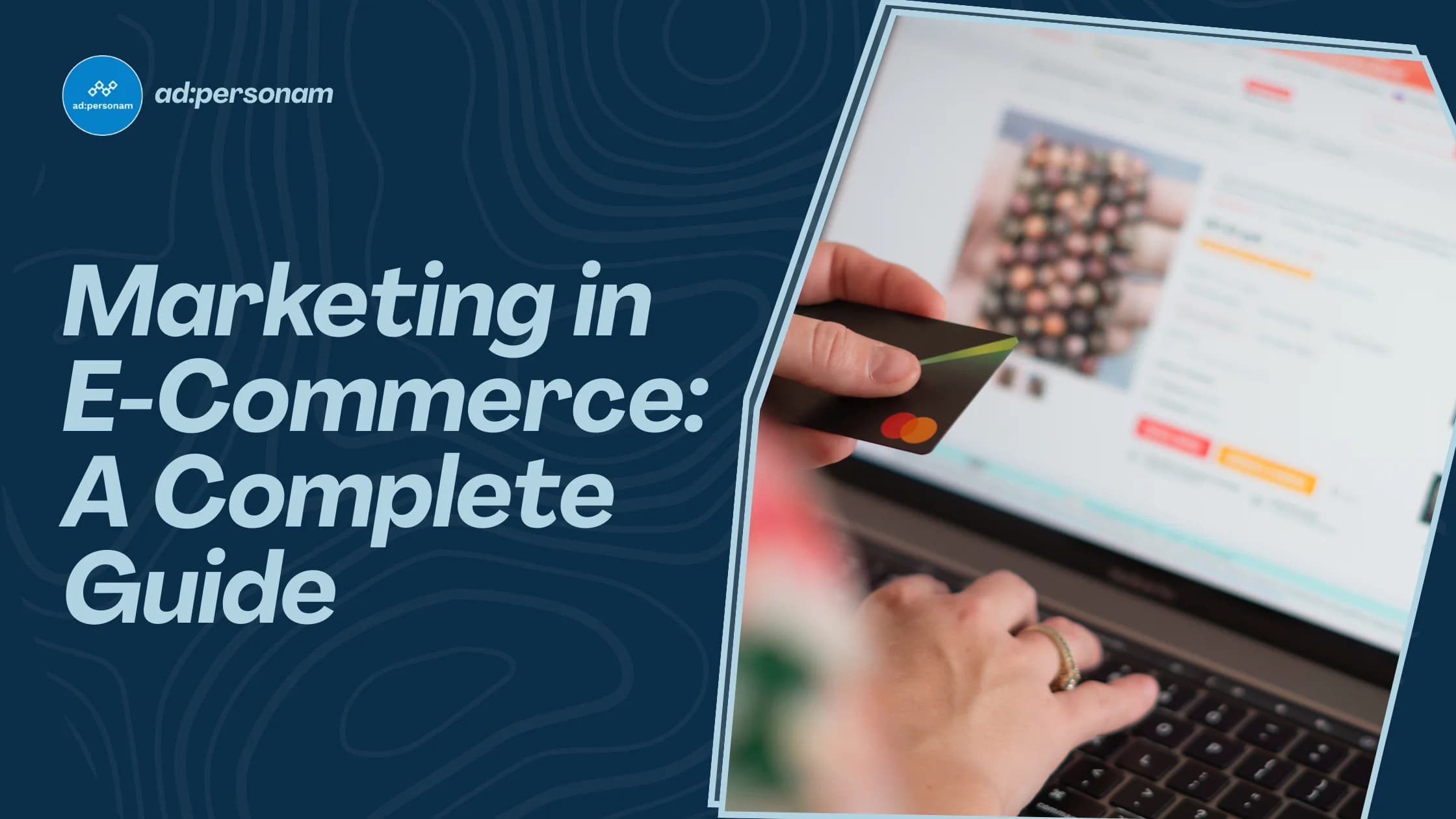
Ecommerce marketing is an ecosystem of activities designed to attract qualified visitors, convert them into customers, and bring them back to buy again. It differs from traditional marketing in data completeness, optimization speed, and the ability to automate strategic decisions. While physical retail marketing focuses on visibility and offline promotions, in ecommerce every action is trackable, measurable, and improvable in real time.
In this guide, we'll explore e-commerce marketing strategies and tools, with a particular focus on programmatic campaigns and their benefits.
Why E-commerce Marketing Matters
The digital marketplace is hypercompetitive: according to recent data, over 80% of users compare alternatives before buying online. The key isn't just "running ads," but integrating SEO, advertising, and retention into a unified approach.
Key Elements of an E-commerce Marketing Strategy
An effective plan follows SMART objectives: specific, measurable, achievable, relevant, and time-bound. From there, you move to audience segmentation, customer journey mapping, and selecting channels most aligned with user behavior. The budget is defined based on LTV (Lifetime Value) and acquisition cost.
A well-balanced marketing mix includes always-on campaigns for brand awareness, tactical actions for performance marketing, and retention activities. Continuous testing enables you to optimize creative, offers, and audiences. In this logic, programmatic via DSP enables omnichannel integration and real-time campaign optimization, adapting bids based on actual performance.
E-commerce Marketing Plan: What It Is and How to Structure It
A solid marketing plan always starts with an initial audit. Continue with buyer persona definition and funnel mapping, from discovery to conversion. Then select channels, build a monthly campaign roadmap, and define KPIs and measurement methods.
Main Channels for E-commerce Marketing and How to Use Them
Multiple channels exist for launching e-commerce campaigns. To select the right one for your needs, it's essential to have clear business objectives and understand how each channel works.
SEO for E-commerce
For effective SEO, it's essential to optimize product pages and category pages. Keywords should be selected based on user intent: informational, comparative, or transactional. To ensure higher conversions, regularly monitor site speed and mobile experience.
Google Ads (SEA)
Structure your account with branded and non-branded campaigns, use accurate conversion tracking, and maximize Google Shopping. Dynamic remarketing helps recover interested users by showing them products they've viewed.
Social & Video Advertising
Campaigns must be adapted to each social platform: Meta is ideal for complete funnel building, TikTok for top-of-funnel and more spontaneous engagement, YouTube for brand awareness and long-form formats. Each platform requires different creative: vertical videos, carousels, or static visuals for retargeting.
Email & CRM
Email marketing remains irreplaceable for retention. Automations like welcome series, abandoned cart reminders, and post-purchase upsells increase average customer value.
Programmatic & DSP
The primary advantage is scalability: you can reach extensive audiences while controlling frequency and optimizing budget in real time. With ad:personam, you access a self-serve DSP with no minimum spend, useful even for small-to-medium businesses to manage video, native, and display campaigns with first-party data.
Sign up now to our Self-Service DSP platform and improve your ads for your digital store!
Affiliate & Influencer
Affiliates and creators expand reach by combining performance and awareness. Key metrics include CPA, conversion rate, and organic traffic increase.
Tools and Tech Stack for E-commerce Marketing
An efficient digital ecosystem relies on integrated tools. Google Analytics 4 and Tag Manager handle measurement and tags; a CDP (Customer Data Platform) collects customer information; an ESP (email service provider) manages automation; while CRM and ad platforms complete the operational chain. Integration is the true value: custom events and server-side tracking enable you to unite performance and creative data in a single dashboard.
AI, Automation, and Personalization
AI is now the invisible engine of modern marketing. It optimizes bidding strategies, generates dynamic creative, personalizes on-site content, and predicts metrics like churn and LTV. Generally, integration with DSP platforms leverages proprietary algorithms to maximize KPIs like ROAS and CPA, even without minimum budgets. Proper AI governance requires constant monitoring, fallback rules, and comparative testing to ensure transparency and security in processes.
How to Create Converting Funnels
An effective funnel guides users from TOFU (Top of Funnel) to BOFU (Bottom of Funnel), accompanying them through all digital touchpoints. Each level has specific objectives: awareness, interest, and decision. Landing pages must be fast, with clear headlines, a single CTA, social proof, and trust signals.
An exemplary automation workflow can start with lead generation: a new subscriber receives valuable content via email (nurturing phase), then a personalized offer at the moment of highest conversion propensity.
High-Performing Creative for E-commerce
Concise copy, cohesive visuals, and impactful micro-videos deliver superior results, especially when personalized for different audiences. Dynamic creative based on catalog feeds allows you to show real products to users who have already viewed them. Multivariate tests help identify effective combinations of headline, image, and call to action. On DSPs and ad networks, precise technical requirements must be met for uploads and formats: file sizes, aspect ratios, and tracking script controls.
On-Page Elements to Maximize Sign-ups
Every detail counts: a short form, a visible and sticky CTA, guarantees near the submit button, inline FAQs and testimonials next to the form improve sign-up rates. A/B tests should verify CTA position, form length, and benefit messaging.
Budget, Bidding Models, and Essential Metrics
Core e-commerce marketing metrics include ROAS, CPA, LTV, CAC, conversion rate (CR), AOV, CTR, and cart recovery rate. Allocating budget evenly between acquisition and retention is essential. On ad:personam, for example, you can set automated smart bidding rules and target ROAS to optimize every dollar spent.
Measurement, Reporting, and A/B Testing
A good monthly report must show quantitative metrics (ROI, conversion rate, traffic) but also qualitative insights: what worked and why. A/B testing methodology compares ad, landing, or email variants with sufficient statistical significance. In attribution models, programmatic introduces an additional layer because ad visibility can influence users even before the click. Evaluating viewability metrics and incremental lift becomes essential.
GDPR, Consent, and Cookieless Tracking
GDPR regulations mandate transparent consent collection and secure data management. Solutions like Consent Management Platforms simplify cookie banner management, while server-side tracking and Conversion APIs maintain accuracy even in cookieless contexts.
Black Friday, Sales, and Seasonal Planning
During traffic peaks like Black Friday or sales periods, a clear checklist is needed: check inventory, plan offers, define dedicated creative, and boost budget. Logistics must also be ready. At the programmatic level, properly managing frequency and segmenting by intent prevents waste and maintains high profitability.
Frequently Asked Questions About E-commerce Marketing
What is e-commerce marketing?
It's the set of strategies and activities that enable an online store to attract visitors, convert them into customers, and retain them, integrating channels like SEO, advertising, social media, and automation. With a DSP platform like ad:personam, programmatic also becomes a full part of the marketing plan, enabling AI-driven campaigns with no minimum spend thresholds.
What is e-commerce?
It's an online platform that enables buying and selling products or services. It can be a proprietary store or a marketplace, functioning through a combination of payment tools, logistics, and customer care. With systems like ad:personam, it can activate custom programmatic campaigns optimized automatically.
How to Apply Programmatic Marketing to E-commerce?
Programmatic advertising enables automated ad space buying, reaching users with high purchase probability and reducing waste. On a DSP like ad:personam, you can directly create display, video, or native campaigns managed by AI, optimizing ROAS and increasing traffic quality to your store.
Improve your e-commerce marketing strategies with ad:personam's Self-Service DSP platform!
You might also like

Programmatic Advertising and AI in 2026: A Guide for SMBs and Agencies
See how AI is reshaping programmatic ad spend in 2026, and why a self-serve DSP with no minimum spend is finally opening the market to SMBs and agencies.
Programmatic DOOH Advertising: A Complete Guide for Advertisers
Learn how programmatic DOOH advertising works: buying models, creative specs, formats, targeting, and measurement, plus how to launch on ad:personam.

Programmatic OOH Advertising: Complete Guide (OOH + DOOH)
See how self-serve programmatic OOH works: buy static, digital, and transit outdoor inventory automatically, beyond traditional outdoor buying.