
Food Marketing: Strategies, Digital Channels & Tools for Brand Growth
Complete guide to food marketing strategies, digital channels, and programmatic tools for growing your food & beverage brand.
Contents
- Why Food Marketing Is Essential for Food & Beverage Companies
- Food Marketing and Commercial Strategies
- Digital Food Marketing
- SEO for Food
- How to Do Food Marketing Today
- Marketing Tools for the Food Sector
- Current Trends in Food Marketing
- Food Marketing and Artificial Intelligence
- Common Mistakes to Avoid in Food Marketing
- Best Practices for Effective Food Marketing Strategy
- Food Marketing FAQ
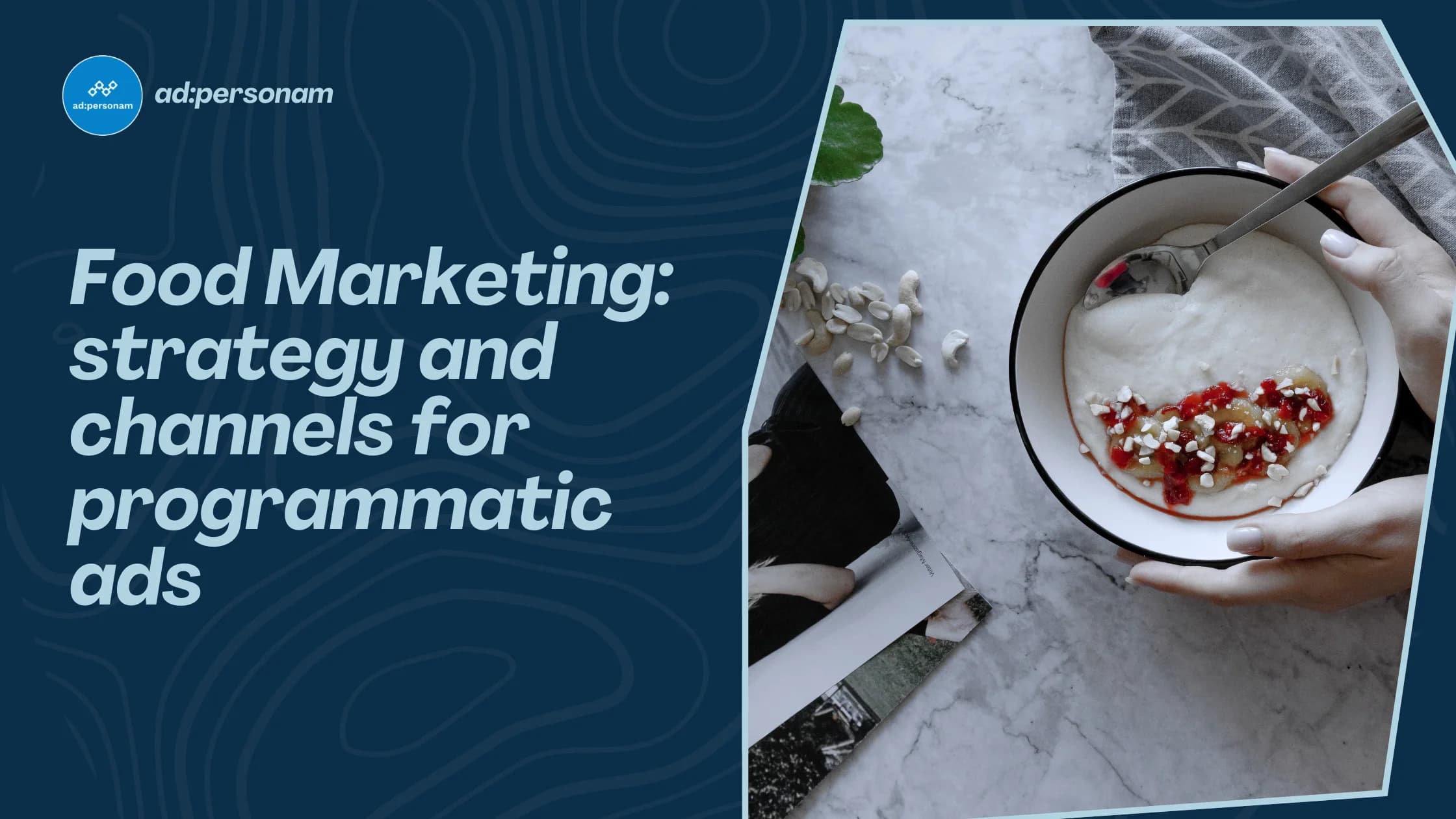
Food marketing encompasses all marketing and communication strategies applied to the food & beverage industry, where emotion, trust, and habit coexist with intense competition. Unlike other sectors, purchasing decisions here respond to sensory and symbolic triggers: seasonality, nutritional values, origin, and brand storytelling. Effective food marketing means combining creativity with data, integrating strategies for restaurants, packaged goods, and food retail—each with specific objectives and channels. This comprehensive guide explores the marketing strategies and channels to grow food brands and increase sales.
Why Food Marketing Is Essential for Food & Beverage Companies
In the food market, competition is fierce, and differentiation rarely depends on the product alone. What truly distinguishes a brand is its ability to be remembered, generate trust, and become part of consumers' daily lives. An effective food marketing plan enhances visibility, builds brand awareness, drives customer loyalty, and increases sales throughout the entire funnel. Digital channels play a central role here. New product discovery largely happens online, through social networks, search engines, and delivery platforms. Understanding and managing these touchpoints is crucial for influencing consumer decision-making.
Food Marketing and Commercial Strategies
A strategic approach to food marketing combines business and communication objectives to create a coherent system that guides customers from awareness to conversion, through engagement and loyalty.
Traditional Food Marketing Strategies
Physical retail locations remain a direct, sensory-driven experience: store design, product aroma, and shelf placement. Packaging also has enormous communicative power, especially when conveying quality or sustainability values. In-store promotions, tastings, and industry trade shows remain effective for building relationships.
However, these actions achieve maximum effectiveness when integrated with digital tools, from QR codes linking to online content to geotargeted social campaigns that amplify the physical experience.
Innovative Food Marketing Strategies
Today's food marketing is data-driven, omnichannel, and experience-focused. The most advanced brands use data to personalize offers and monitor customer behavior in real-time. AI and automation technologies optimize campaigns, predict sales, and enhance targeting. The goal is creating consistent experiences that unite taste, emotion, and value—from social content to programmatic campaigns to in-store purchases.
Digital Food Marketing
Digital channels have become the lifeblood of food marketing. Over 70% of consumers discover new products online and most seek reviews and visual content before purchasing. Digital presence is no longer optional but strategic. Managing digital channels allows brands to intercept users at key moments: while seeking recipe inspiration, comparing prices, or exploring new culinary experiences.
Social Media Presence
Social networks are the most fertile ground for food brands. Images of appetizing dishes and taste-related experiences generate emotion, sharing, and interaction. Platforms like Instagram, TikTok, and Pinterest directly influence purchasing decisions, becoming spaces for brand discovery and engagement. The winning approach combines creativity with authenticity: telling stories of ingredients, people, and territories.
Content Marketing for Food
In food marketing, content serves as the bridge between brand and desire. Visual storytelling, preparation videos, and personalized recipes help transform products into experiences. Successful brands know how to encapsulate their value proposition in content, creating coherent and recognizable imagery. Every piece of content should evoke trust and inspire curiosity, rather than sell directly.
E-commerce and Food Delivery
E-commerce platforms and food delivery services have radically changed purchasing behavior. From daily grocery shopping to fine dining, digital channels enable new relationship models between brands and consumers. Integrating direct sales solutions and delivery service partnerships allows companies to expand distribution and maintain constant contact with end customers.
SEO for Food
Search engine visibility is essential. Food-related searches—recipes, gourmet products, nutritional advice—represent significant organic traffic opportunities. A well-structured food SEO strategy combines valuable content like blogs, videos, and guides with technical optimization, driving brand discovery during high-intent purchase moments.
How to Do Food Marketing Today
Modern food marketing means thinking holistically and planning based on data. The key is coordinating objectives, channels, and content to build a 360-degree strategy that guides consumers throughout their journey.
The Importance of a 360-Degree Strategy
There's no longer a clear boundary between online and offline. User experience flows from digital to point-of-sale and back. Managing both coherently means offering a seamless experience where every contact strengthens the brand relationship.
Creativity as the Primary Lever
Graphics, videos, and emotional formats are fundamental tools. Creativity is the key to standing out among thousands of daily visual stimuli. A well-conceived visual is worth as much as a well-targeted campaign: authentically portraying food generates empathy and sharing.
Digital Channels as Essential Touchpoints
Every digital touchpoint is a relationship opportunity. From newsletters to display campaigns, from pre-roll videos to sponsored stories, each feeds the customer experience. The goal is being present with the right message when desire emerges.
Reaching the Right Audience
Campaign success depends on the ability to speak to the correct segment. Analyzing consumption data, using CRM systems, and segmenting by interests or eating habits enable more relevant messaging for interested audiences while optimizing budget.
Marketing Tools for the Food Sector
For the food sector, technology has become a competitive accelerator. Automation, analytics, and programmatic advertising tools enable more efficient campaign management.
Digital Advertising and Programmatic
Online advertising enables working on awareness, consideration, and conversion. Self-serve DSP platforms like ad:personam allow companies to independently plan and manage display, video, and native campaigns, optimizing them in real-time through machine learning. This approach enhances visibility, reduces waste, and guarantees measurable results.
Data Analysis and KPIs
Measuring results is essential. In food marketing, monitoring KPIs like engagement, reach, CTR, and ROAS helps understand which messages work and which strategies deserve amplification. Using integrated dashboards, like ad:personam's platform, enables real-time performance reading and rapid strategy adjustments.
Discover all features of our DSP platform!
Current Trends in Food Marketing
Key emerging trends include sustainability, personalization, and omnichannel experiences. Consumers seek transparency and quality, showing attention to product origins and eco-friendly packaging. Simultaneously, they expect tailored content and offers aligned with their interests. Integrated communication across stores, social media, apps, and delivery represents the new frontier for food brands.
Food Marketing and Artificial Intelligence
AI is already reality in food marketing: from predictive targeting to content personalization and campaign optimization. Programmatic advertising platforms use advanced algorithms to analyze browsing and behavior data, improve message precision, and optimize creatives in real-time. This evolution not only reduces costs but delivers concrete value to marketing strategies.
Common Mistakes to Avoid in Food Marketing
Common food marketing mistakes include overly generic communications, lack of visual consistency, underestimating SEO and data analysis importance. Ignoring seasonality or failing to adapt communication to platforms can also limit campaign success. Food marketing requires continuity and vision: improvisation rarely works.
Best Practices for Effective Food Marketing Strategy
Effective food marketing combines consistency, emotion, and measurability. It means authentically portraying products, choosing the right channels, and interpreting data to continuously improve performance. In a constantly evolving market, combining creativity with technology provides the most solid formula for growing brands and sales.
Food Marketing FAQ
What is food marketing?
Food marketing is the comprehensive set of marketing and communication strategies applied to the food & beverage sector to promote products, brands, and food-related services. It includes branding, digital advertising, content, social media, and e-commerce activities aimed at influencing consumer purchase decisions. In digital contexts, food marketing uses data-driven approaches and programmatic tools manageable through DSPs like ad:personam.
How to build an effective food marketing campaign?
An effective food marketing campaign starts with defining objectives and target audience, and selecting high-impact visual and video formats. It's important to create messages consistent with the brand and monitor performance. With a DSP platform like ad:personam, you can independently manage campaigns, optimize investments, and leverage artificial intelligence to improve results.
How to integrate food marketing into a programmatic strategy?
Integrating food marketing into a programmatic strategy means using data and technology to plan and optimize campaigns. Through ad:personam, brands can activate display, video, and native campaigns, segment audiences, and measure performance precisely, increasing message relevance and advertising spend efficiency.
Transform your food marketing with ad:personam: automated campaigns, precise targeting, and measurable ROI. Discover all features of our DSP for increasingly effective programmatic advertising!
You might also like
Inclusive Marketing: How Programmatic Advertising Makes Ads for Everyone
Discover what inclusive marketing is, why it matters, and how programmatic advertising helps brands build authentic, accessible, and effective campaigns for diverse audiences.
Sports Marketing Revolution: How Programmatic Advertising Is Changing the Game
Discover how programmatic advertising is transforming sports marketing — from real-time fan targeting to measurable ROAS across display, CTV, and audio.
Cookieless Marketing: The Complete Guide to Advertising Without Cookies in 2026
Discover how to adapt your advertising to an increasingly cookieless digital context using a robust self-serve DSP platform.