
Fashion Marketing: Strategies and Programmatic Campaigns for Brand Growth
Learn how to elevate your fashion marketing strategies using programmatic advertising and a self-serve DSP to reach the right audience and drive sales.
Contents
- Understanding Fashion Marketing
- Fashion Marketing: Objectives and Key Goals
- How to Stand Out Online in the Fashion Industry
- Building an Effective Fashion Marketing Strategy
- Product-Oriented Marketing Strategies in Fashion
- Fashion Web Marketing: New Approaches to Sales
- Targeting, Segmentation, and Personalization
- KPIs and Results to Monitor
- Fashion Marketing: A Practical Example
- The Professionals of Fashion Marketing
- Why Programmatic Advertising is Essential in Fashion
- How ad:personam Supports Your Fashion Marketing Strategy
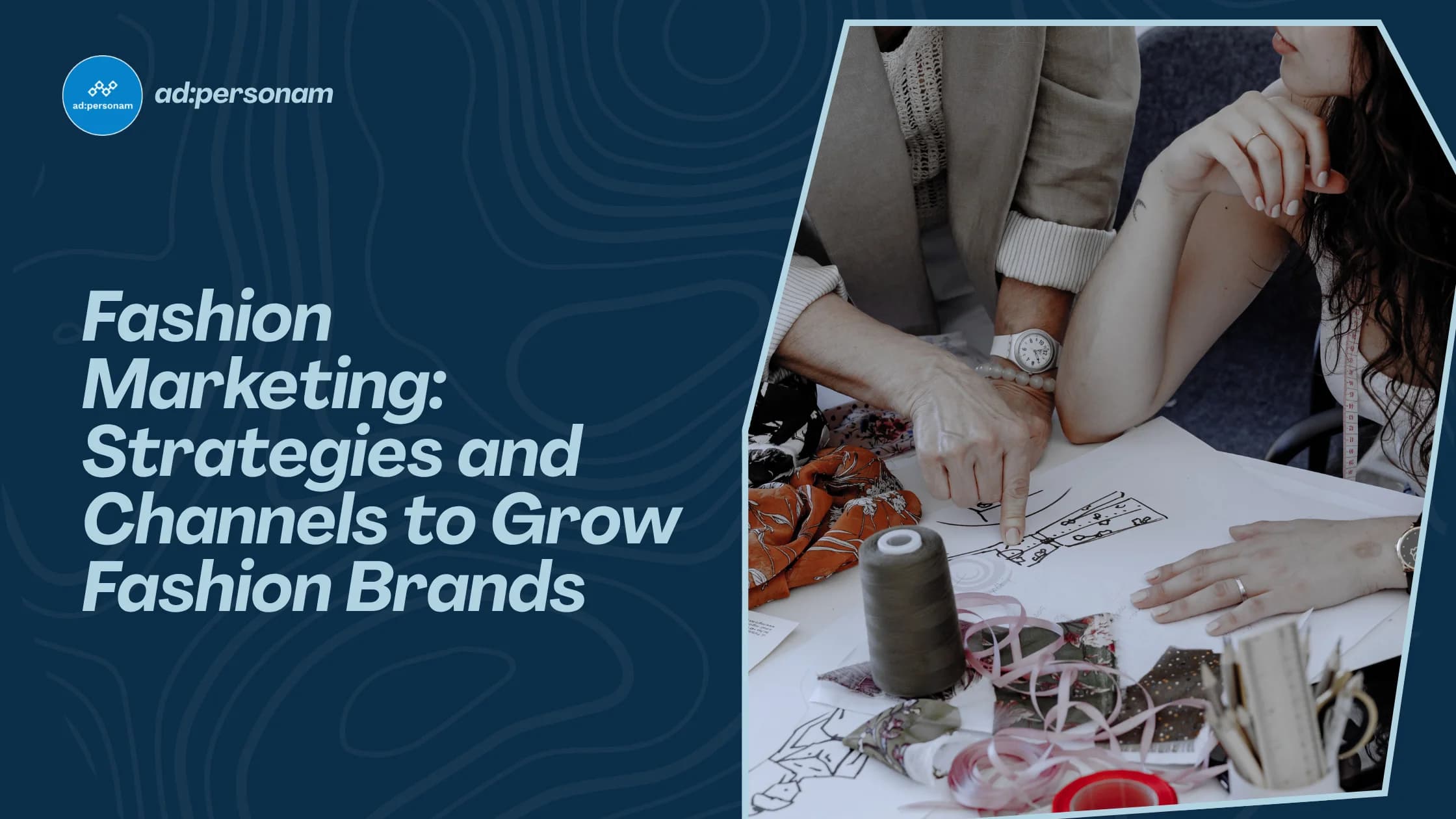
Fashion marketing is the combination of strategies, activities, and tools that fashion brands use to position themselves, gain visibility, attract the right audience, and turn interest into sales and loyalty. By leveraging data, advanced segmentation, and measurable digital campaigns, the value of fashion marketing lies in its ability to blend creativity with performance.
Understanding Fashion Marketing
Fashion marketing goes beyond simply promoting garments or collections. It builds an imaginary, defines a positioning, and nurtures the relationship with the audience. It is about storytelling—communicating a style, an identity, and a coherent universe.
Communication works on two levels simultaneously: desire and commercial performance. On one hand, it creates aspiration and brand recognition; on the other, it guides the user toward a purchase. This balance depends on the consistency between brand identity, aesthetics, target audience, and how the message is distributed.
Fashion Marketing: Objectives and Key Goals
From an operational perspective, fashion marketing has concrete, measurable goals. A fashion brand must increase awareness, stand out from competitors, support the launch of new collections, and bolster both e-commerce and physical retail. At the same time, it is essential to attract qualified traffic, generate conversions, increase repeat purchases, and build a loyal customer base. Thanks to advanced technologies and omnichannel advertising tools, these goals can be achieved through self-serve programmatic campaigns without minimum spend requirements, utilizing data-driven optimizations and AI algorithms.
How to Stand Out Online in the Fashion Industry
Standing out online in the fashion world requires a precise mix of branding, creativity, and media distribution because the market is highly saturated. Effective visibility requires a strategy that ensures presence in the right contexts. Visual recognition, message consistency, and channel selection are key elements, as are exposure frequency and the ability to intercept relevant audiences. Campaigns should be distributed across premium inventory using various formats and channels, with accurate targeting and constant brand presence control.
Attracting and Retaining Your Audience
To attract and retain an audience, fashion marketing must guide the user through the entire funnel, from brand discovery to loyalty. This means managing every phase of the journey, following a process of building trust: awareness, consideration, conversion, reactivation, and loyalty. The fashion audience is highly responsive to personalized messages, coherent editorial contexts, and impactful creative. Tools like audience targeting, contextual targeting, and retargeting are ideal for optimizing traffic quality and increasing conversion probabilities by focusing on a specific, "warm" audience. Simultaneously, performance analysis allows for continuous campaign improvement, making the budget more efficient.
Meeting Audience Needs
In fashion, audience needs are influenced by lifestyle, price, usage occasions, values, and seasonal trends. For this reason, it is fundamental to listen to the market and correctly segment the target. A brand must craft different messages for prospects, regular customers, and Lookalike audiences. Using data, audience segments, and geographic and contextual targeting allows for dynamic communication. Continuous campaign optimization ensures strategies remain aligned with changing user behaviors.
Building an Effective Fashion Marketing Strategy
An effective strategy starts with brand analysis and defining objectives. Next, you study the target audience, define positioning, and select the most suitable channels. The creative phase translates these elements into content and messages, while media planning allows for precise campaign activation. KPI monitoring and continuous optimization complete the process. In this framework, fashion digital marketing integrates perfectly with programmatic planning. Self-serve DSP platforms like ad:personam offer the ideal solution for moving quickly from strategy to execution with greater autonomy and control.
Elevate your fashion marketing strategies with ad:personam!
Product-Oriented Marketing Strategies in Fashion
A product-oriented strategy in fashion focuses on elements like collections, capsules, new arrivals, and best sellers. Each product or line can become the center of a dedicated campaign, though communication shouldn't be limited to the product alone. It must integrate functional value, desirability, and brand identity. The most effective campaigns differentiate creative and messaging based on the target and product line, leveraging formats like display, video, and native to highlight every offering.
Fashion Marketing vs. Fashion Merchandising
Fashion marketing and fashion merchandising perform different but complementary functions. Fashion marketing focuses on market analysis, defining positioning, and promoting the brand. Fashion merchandising, on the other hand, deals with the assortment, product presentation, pricing, and commercial logic. Together, they create a consistent experience for the customer, from communication to the point of sale or product page.
Fashion Web Marketing: New Approaches to Sales
With digital evolution, fashion marketing has integrated new tools and approaches. E-commerce, omnichannel campaigns, video, and native advertising have transformed how brands communicate and sell. With the ability to program and automate publications, brands can be more precise in audience segmentation and effective channel management. Programmatic campaign platforms allow for managing multiple channels simultaneously, improving efficiency and reducing budget waste.
Moving Toward Fashion Marketing 2.0
Fashion marketing 2.0 is data-driven, omnichannel, and personalized. Artificial Intelligence plays an increasingly central role, supporting planning, targeting, and performance analysis. For today’s marketing, speed of testing, the ability to interpret data, and the continuous adaptation of messages are what matter most. Advanced platforms allow even small teams to access professional tools, making high-level marketing more accessible and results-oriented.
Most Effective Channels and Formats for Fashion Marketing
In fashion, channels and formats must be chosen based on objectives. Display, video, CTV, audio, and native offer different possibilities, while premium editorial environments ensure quality and context. Visual formats remain central, but their effectiveness depends on the funnel stage. A self-serve DSP allows for managing all these channels from a single interface, simplifying planning and activation while enabling data-supported decisions on the right format and channel.
Targeting, Segmentation, and Personalization
A single "fashion audience" doesn't exist. Every target must be adapted to the brand, differing by interests, age, buying behavior, style, and spending power. You must segment the audience and personalize messages. Utilizing techniques like audience targeting, contextual targeting, cookieless segments, and geo-targeting significantly improves campaign relevance and overall efficiency.
KPIs and Results to Monitor
As with any marketing campaign, monitoring and analyzing KPIs is essential. Basic indicators include visibility, reach, CTR, and qualified traffic. As the promotion progresses, you should analyze time on site, conversions, CPA, ROAS, and frequency. Returning user rates and performance by audience or format also provide useful insights. To create quick and well-structured reports, intuitive dashboards and AI-supported analysis tools help read data and optimize campaigns continuously.
Fashion Marketing: A Practical Example
Imagine a fashion brand launching a new collection. After defining the target, it activates campaigns across multiple channels, differentiating messages between new users and existing customers. Campaigns are monitored in real-time, with optimizations based on collected data. In such a precise plan, a self-serve DSP platform allows for rapidly adjusting budget distribution, improving performance and maximizing return on investment.
The Professionals of Fashion Marketing
Fashion marketing involves various professionals, including marketing managers, digital strategists, media buyers, and content specialists. Alongside these creative and strategic skills, analytical roles capable of interpreting data are becoming increasingly important. The use of self-serve tools like ad:personam and AI support makes these activities accessible even to lean teams, who can focus more on managerial and strategic oversight.
Fashion Bloggers and Influencers
Figures like fashion bloggers and influencers contribute to brand awareness and building desirability. However, they should not be the sole pillar of a strategy. A result-oriented approach integrates organic content, collaborations, and advertising, maintaining control over distribution and result measurement.
Why Programmatic Advertising is Essential in Fashion
Programmatic advertising offers concrete advantages for the fashion sector by allowing rapid campaign activation, precise budget control, and access to high-quality inventory. Advanced segmentation, multi-format management, and real-time AI optimization make this approach particularly effective. The self-serve model, like ad:personam’s no-minimum-spend policy, makes it accessible even to emerging brands.
How ad:personam Supports Your Fashion Marketing Strategy
A DSP platform like ad:personam allows you to plan and activate campaigns independently, starting with a free initial planning phase. You also gain access to premium inventory and various formats, including display, video, CTV, audio, and native. Advanced targeting, reporting, and AI-driven tools enable you to manage and optimize campaigns effectively and measurably. Understanding your audience, using data, and distributing messages precisely is what allows brands to grow in a competitive market.
Start planning your campaign with ad:personam to identify your audience, refine it over time, and make your marketing campaigns increasingly successful.
You might also like
Programmatic DOOH Advertising: A Complete Guide for Advertisers
Learn how programmatic DOOH advertising works: buying models, creative specs, formats, targeting, and measurement, plus how to launch on ad:personam.
Rich Media Ads: What They Are & How They Work
Rich media ads are interactive, expandable, animated—not static banners. See formats, use cases & benefits, then build yours with the AI Banner Generator.
How Does Display Advertising Work? A Practical Guide
How does display advertising work? A guide to programmatic display formats (banner, HTML5, rich media), targeting methods, and how to run effective campaigns.