
Inclusive Marketing: How Programmatic Advertising Makes Ads for Everyone
Discover what inclusive marketing is, why it matters, and how programmatic advertising helps brands build authentic, accessible, and effective campaigns for diverse audiences.
Contents
- What Is Inclusive Marketing?
- Why Is Inclusive Marketing Important?
- The Principles of Inclusive Marketing
- Four Trends and Examples of Inclusive Marketing
- From Smart Devices to Inclusive Advertising: How Brands Can Make the World More Accessible
- Creating an Inclusive Marketing Strategy
- Why Inclusive Marketing Matters for Every Brand
- The Meaning and Benefits of Inclusive Marketing in Business Strategy
- Diversity and Inclusion in Marketing: How to Face the Challenges
- The Role of Visual Representation in Inclusive Marketing
- Best Practices for Implementing Inclusive Marketing
- How Ad:personam Makes Inclusive Marketing Accessible to Everyone
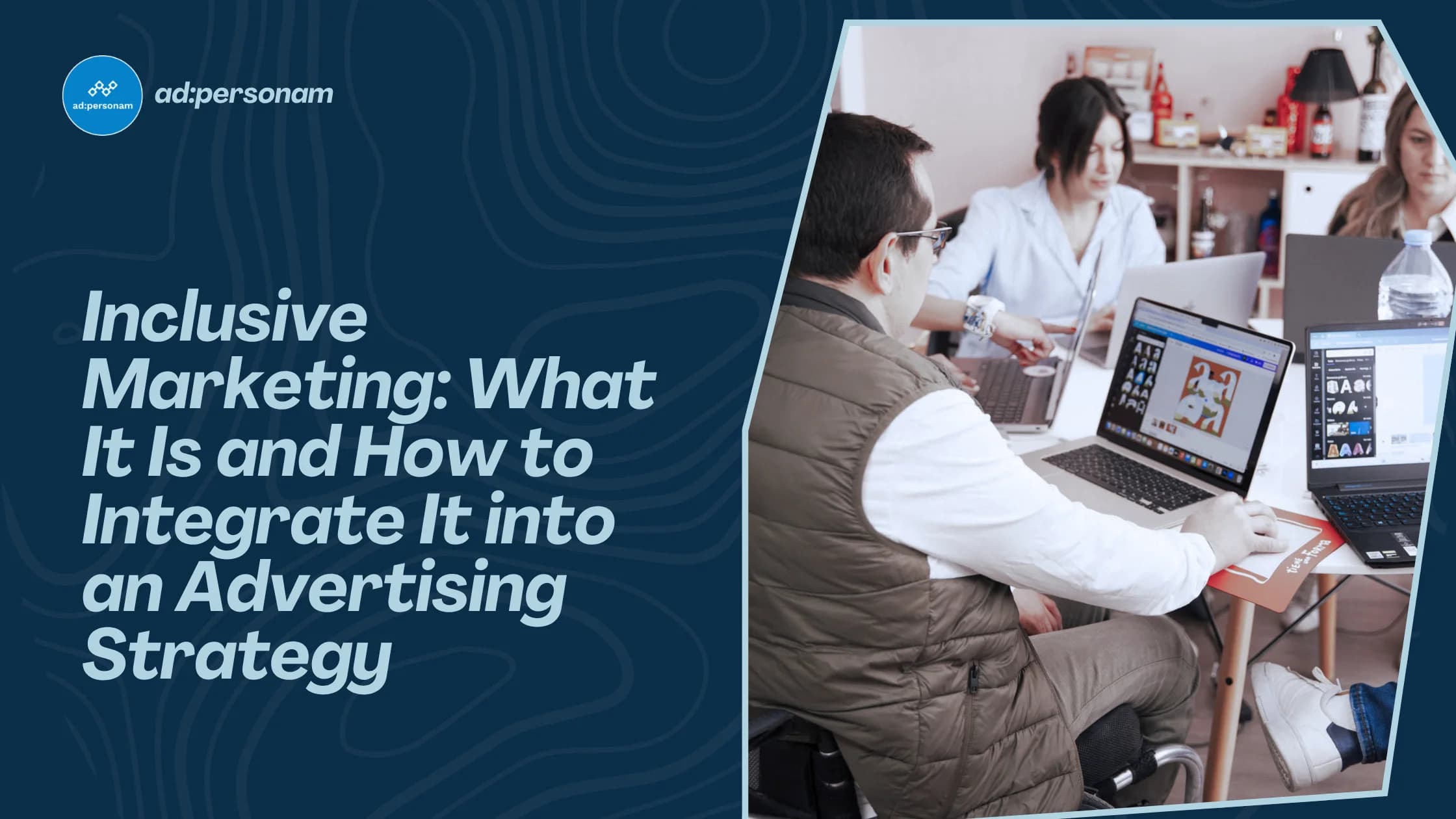
Inclusive marketing is an important growth lever for businesses. More and more consumers reward brands that authentically, consistently, and accessibly represent diverse people, needs, and contexts. Programmatic advertising provides a decisive advantage for those pursuing this approach because it enables distributing more relevant messages, in the right contexts, and to genuinely different audiences, making advertising more effective and closer to market reality.
What Is Inclusive Marketing?
Inclusive marketing is a strategic approach that aims to authentically represent and engage a variety of social, cultural, and demographic groups, going beyond stereotypes to create genuine connections. It involves not just visual diversity, but also accessibility, inclusive language, and authentic representation. It means designing campaigns that truly speak to people, without artificial simplifications.
Why Is Inclusive Marketing Important?
Inclusive marketing matters first of all for market reasons. Diverse consumers represent a growing share of global GDP and carry increasing weight in purchasing decisions. Brands that reflect values of inclusion and diversity tend to build stronger, more lasting relationships with their audiences. Brand loyalty also counts. People reward companies that show consistency between communication, values, and behavior. Diverse perspectives often lead to smarter campaigns, better products, and more innovative ideas. There is also the compliance angle. Regulations and social expectations are increasingly moving toward inclusion, accessibility, and accurate representation. Multiple studies compiled by CIM show that inclusion influences purchasing behavior and loyalty, while 64% of people say they support advertising with diverse representations.
The Principles of Inclusive Marketing
To execute a successful inclusive marketing project, following certain principles is essential. Let's examine them in detail.
Authentic Inclusion
Authentic inclusion means involving people in the creative process, listening to their perspectives, and building messages rooted in real understanding. Tokenism — superficially including a person or group just to appear inclusive — is one of the most common mistakes. Audiences can easily tell when a representation feels forced or lacks credibility.
Language and Imagery
Inclusive language is fundamental. Using simple, respectful, and neutral words where appropriate helps avoid unnecessary exclusion. The same goes for imagery, which should show real people in everyday contexts — not stereotyped or artificial ones. Images matter because they either reinforce or weaken the message.
Representation Matters
Showing people of different ethnicities, abilities, ages, orientations, and identities is not just an ethical consideration. It is a strategic choice. Representation truly adds value when it shows these people in roles of competence, leadership, and autonomy — not merely as spectators or vulnerable subjects to be protected. This shift in perspective makes communication far more powerful.
Authentic Storytelling
Inclusive storytelling works when it tells real or plausible experiences close to people's lives. It's not enough to simply "add diversity" to an existing story. The most effective campaigns are those that start from a genuine insight and build a narrative consistent with the audience's lived experience.
Cultural Sensitivity
Every culture has specific symbols, values, habits, and references. Inclusive marketing must respect them, avoiding cultural appropriation or superficial simplifications. This means working with more attention, more listening, and more research. Celebrating a holiday, a community, or an identity requires awareness — not just good intentions.
Accessibility
Accessibility is an essential part of inclusive marketing. Content with subtitles, audio descriptions, proper color contrast, and easily navigable websites allows far more people to truly engage with the message. If a campaign is beautiful but not accessible, it excludes part of the audience. And today, that is no longer acceptable from either an ethical or a commercial standpoint.
Four Trends and Examples of Inclusive Marketing
Let's examine four case studies that highlight inclusive marketing trends.
Jeep: "The Women Era" and Cultural Storytelling
Jeep used programmatic advertising and streaming formats to speak to a female audience through a series of content pieces dedicated to independence and empowerment. The strength of this approach lies in combining storytelling with targeted distribution. The campaign demonstrates that when the message is consistent with the audience and the context in which it appears, effectiveness increases. The brand speaks not just about product, but about values and identity.
Programmatic advertising can help you reach your target audience with precision, whatever the final goal of your campaign.
Make the most of our Self-Service DSP platform's features!
Nissan UK: "Dare to Defy" Against Gender Stereotypes
"Dare to Defy" is a campaign that shows how automotive brands can overcome gender stereotypes and communicate more openly by letting protagonists speak directly. Using diverse models, inclusive language, and empowering messages helps the brand feel more current. Inclusion becomes part of positioning, not just creative execution.
Ad Council and Amazon: A Strong Message for Mental Health
This case is interesting because it uses music as a universal language to address a sensitive topic like mental health. The result is a more accessible, empathetic, and cross-cutting message. When a brand or organization uses a code shared by different audiences, it can overcome linguistic and cultural barriers. This is a very useful strategy in programmatic advertising, as it allows content to be adapted across multiple environments and targets.
From Smart Devices to Inclusive Advertising: How Brands Can Make the World More Accessible
Assistive technologies and smart tools are also changing the way advertising is done. Brands can design experiences better suited to people with disabilities or specific needs. This means more readable creatives, more flexible formats, and simpler digital journeys. Accessibility is not a technical detail — it is part of overall user experience quality.
Creating an Inclusive Marketing Strategy
Building an inclusive campaign requires several steps, with the goal of creating a cohesive project in both the tools used and the message delivered. Let's walk through the process step by step.
Authentic Representation
The first step is involving diverse people already in the ideation phase. They should not just be the subjects of the campaign, but also part of the creative process. This approach helps avoid tone errors, stereotypes, and unconvincing representations. The more open the process, the more solid the result.
Accessible Content
Every digital content piece should follow accessibility principles consistent with WCAG 2.1 guidelines. This is now a core requirement for any serious strategy. Subtitles, text alternatives, readability, and clear navigation improve the experience for everyone — not just people with disabilities. Accessibility is, in fact, a form of general quality improvement.
Cultural Competence
The team must be trained on diversity, inclusion, and unconscious bias. Without cultural competence, even a good idea can result in the wrong message. Training helps recognize nuances, avoid mistakes, and build more respectful campaigns. It is an investment that has direct effects on work quality.
Clear Communication
Simple, precise language free of unnecessary jargon makes communication more inclusive. Translations must also be accurate and adapted to context — not just converted word for word. Clarity is a form of respect. The more understandable the message, the more accessible the brand becomes.
Strategic Implementation
Inclusion must be planned across all touchpoints: creative, media, landing pages, CRM, and customer journey. It cannot be an isolated campaign element. Programmatic advertising is especially useful because it allows differentiating messages and contexts while maintaining a coherent strategy. This makes communication more precise and more effective.
Why Inclusive Marketing Matters for Every Brand
Inclusive marketing is a smarter way to communicate. It helps brands and large companies build brand equity, loyalty, and access to new markets. It is not just about reputation — it is also about the ability to better understand the real audience. The more a brand can represent the complexity of people, the more relevant it becomes.
The Meaning and Benefits of Inclusive Marketing in Business Strategy
The benefits of inclusive marketing are tangible. They can translate into increased sales in more diverse segments, improved reputation, new product ideas, and more engaged teams. Research from McKinsey and Deloitte shows that diversity is also a performance driver. Companies that genuinely invest in inclusion tend to be more resilient, innovative, and competitive.
Diversity and Inclusion in Marketing: How to Face the Challenges
The most common challenge is tokenism. To avoid it, brands must move from symbolic representation to genuine involvement. Another issue is cultural appropriation, which is resolved through research, listening, and collaborating with people competent in the cultural context being represented. Even with limited budgets, much can be achieved by working on clarity, accessibility, and consistency. Measurement remains central. Looking at average results is not enough — you need to understand whether the campaign truly works across different audience segments.
What Can Brands Do?
There are five concrete actions brands can take, and they should be seen as a unified system:
- An internal audit helps understand how well the team and audience are truly represented;
- authentic partnerships with credible organizations and creators reduce the risk of superficial messaging;
- content review allows correcting stereotypes, barriers, and inconsistencies;
- team training builds competence; transparency about progress makes the journey more credible;
- Inclusion must be treated as a continuous practice. The most convincing brands are those that show measurable progress — not those that publish a single "right" campaign once a year.
The Role of Visual Representation in Inclusive Marketing
Images are decisive because they influence audience perception in seconds. An inclusive visual representation shows different people in real, positive, and non-stereotyped roles. Good practices use authentic, contextualized, and respectful visuals. Bad practices, on the other hand, reduce diversity to ornamentation and weaken brand credibility.
Inclusive Marketing and Market Targeting: Identifying and Reaching New Audiences
Inclusive marketing helps reach underrepresented segments often overlooked by traditional strategies. This includes people with disabilities, older adults, LGBTQ+ communities, cultural minorities, women in male-dominated sectors, and other groups frequently underserved. Doing it well requires audience analytics tools, qualitative research, and attention to real behaviors. Programmatic advertising is useful precisely because it allows adapting messages to different targets and contexts.
Best Practices for Implementing Inclusive Marketing
The main best practices are simple but decisive. Start with listening, involve diversity in the creative team, test with different focus groups, measure by segment, iterate continuously, and communicate transparently. Inclusion must be designed as an ongoing process that improves results and makes the brand more credible, more accessible, and stronger over time.
How Ad:personam Makes Inclusive Marketing Accessible to Everyone
Ad:personam makes inclusive marketing truly accessible even for smaller businesses, thanks to a self-serve approach with no minimum spend requirements. This means you don't need large budgets to launch more representative, more precise, and more effective campaigns — even a small business can start communicating inclusively and professionally.
The platform integrates advanced AI tools for optimization, capable of automatically identifying the best-performing audience segments and improving campaigns in real time. Precise targeting allows combining criteria like geo-location, specific interests, and purchase behaviors to deliver more relevant messages to the right audiences. Added to this is multi-channel capability, with the ability to cover display, video, CTV, and audio, reaching people in their preferred consumption contexts. Another key feature is detailed reporting, which allows reading results disaggregated by variables like ethnicity, age, ability, and other relevant segments. This approach makes it easier to understand not just whether a campaign works, but who it truly works for. Testing tools, such as A/B tests with inclusive variants, help compare different messages, visuals, and formats to identify the most effective and audience-respectful solutions.
Inclusive Marketing Becomes Accessible with a Self-Service DSP
Inclusive marketing is now an essential component of any modern strategy, because it responds to both an ethical need and a business necessity. Programmatic advertising is the most suitable tool to implement it in a scalable, precise, and measurable way, while ad:personam represents the platform that simplifies its adoption even for those starting with limited resources. Don't fall behind: try ad:personam today and start reaching all your potential customers.
You might also like

Programmatic DOOH Advertising: A Complete Guide for Advertisers
Learn how programmatic DOOH advertising works: buying models, creative specs, formats, targeting, and measurement, plus how to launch on ad:personam.
Programmatic OOH Advertising: Complete Guide (OOH + DOOH)
See how self-serve programmatic OOH works: buy static, digital, and transit outdoor inventory automatically, beyond traditional outdoor buying.
Sports Marketing Revolution: How Programmatic Advertising Is Changing the Game
Discover how programmatic advertising is transforming sports marketing — from real-time fan targeting to measurable ROAS across display, CTV, and audio.